LEPTOSPIROSIS, SEA LIONS - USA (OREGON)
***********************************************
A ProMED-mail post
<http://www.promedmail.org>
ProMED-mail is a program of the
International Society for Infectious Diseases <http://www.isid.org>
Date: 5 Nov 2010
Source: Gazette Times [edited]
<http://www.gazettetimes.com/news/local/article_e1c02830-e8fe-11df-a29b->
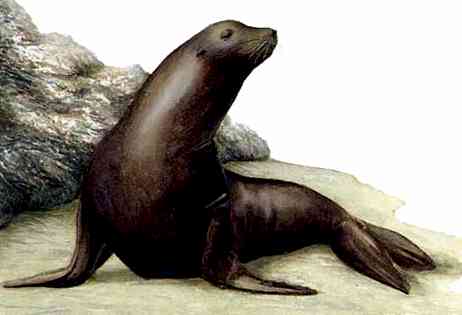
A sharp increase in the number of sick and dead California sea lions has been reported along the Oregon coast in recent weeks, and necropsies conducted on dozens of the animals suggest that many may have died from leptospirosis.
Leptospirosis is a bacterial disease found in a variety of animal species and can be transmitted to humans, according to Jim Rice, an Oregon State University scientist who coordinates the statewide Oregon Marine Mammal Stranding Network.
"We are now getting calls for multiple sick or dead sea lions daily, which is higher than normal," said Rice, an OSU Marine Mammal Institute researcher who works at the university's Hatfield Marine Science Center in Newport.
"The overall number of sea lions also has risen, so it's difficult to compare mortality rates from year to year, but certainly we're seeing an increase in animals that test positive for leptospirosis."
Rice and his colleagues at the stranding network have sent dozens of dead animals to the Veterinary Diagnostic Laboratory in OSU's College of Veterinary Medicine. And though not all of the animals have tested positive, many showed clear signs of leptospirosis, which raises concern about human health.
Kathy O'Reilly, who heads the bacterial section of the Veterinary Diagnostic Lab, said leptospirosis can be virulent.
"There have been 50 to 100 cases per year in the United States reported to the Centers for Disease Control," O'Reilly said, "and in
31 percent of the human cases, it is traced back to contact with infected rats, and in 30 percent of the cases, it is tracked to infected dogs."
Dogs can be infected with leptospirosis through contact with stricken sea lions. Rice said coastal visitors should always avoid sea lions on the beach and during outbreaks of leptospirosis should keep their dogs on a leash. The disease can be transmitted by direct contact, or even through contact with damp sand, soil or vegetation contaminated by the urine of infected animals. Rice said that in 2009, the network had 350 reports of California sea lions stranded on Oregon beaches, either dead or severely ill and presumed to have died. And Oregon is on pace to surpass that total this year [2010], he pointed out.
"Typically, sea lions with leptospirosis are quite emaciated and lethargic," Rice said. "Those that don't die on the beach may get washed out to sea and die, or they may move elsewhere. It's possible that some recover, but these are very sick animals."
The Oregon Marine Mammal Stranding Network is a collaborative volunteer effort to respond to reports of sick or dead marine mammals
-- including whales, seals and sea lions -- and report data about the strandings to the National Marine Fisheries Service. It is headquartered at OSU's Marine Mammal Institute at the Hatfield Marine Science Center and coordinated by Rice.
Partners in the Oregon Marine Mammal Stranding Network include OSU, Portland State University, the University of Oregon's Institute for Marine Biology, the Oregon Department of Fish and Wildlife, the Oregon State Police, the Oregon Department of Parks and Recreation and others.
Persons seeing dead or sick marine mammals on Oregon beaches are encouraged to call the Oregon State Police at 1-800-452-7888.
[Byline: Mark Floyd]
--
Communicated by:
HealthMap Alerts via
ProMED-mail <promed@promedmail.org>
[Leptospirosis is a bacterial disease caused by the spirochete _Leptospira_ sp. There are over 17 species and various serovars. The taxonomy can become confusing. Regardless of the taxonomy, this bacteria infects both human beings and a variety of animals. It is generally thought of as an infection within the kidneys, because it can be transmitted by contact with infected urine, or through water having urine from infected wild animals, rats, etc. There are some serovars that may affect the liver as well.
The California sea lion (_Zalophus californianus_) is thought to be infected with _L. interrrogans_.
When sea lions are infected, they demonstrate the unusual behavior of drinking water. Most sea lions acquire the water they need through the food they consume. When ill sea lions demonstrate the behavior of drinking water, they are tested for leptospirosis if they are in a marine habitat facility.
Animals who are sick and brought to a marine mammal facility where they can be treated can recover from the disease. However, many animals in the wild, not recognized as being ill, die and wash up on shore and are then found.
California sea lions (_Zalophus californianus_) breed in rookeries along the southern California coast during May and June (Zuerner et al., 2009). The female sea lions typically stay close to the rookeries to nurse their pups, but they may move as far north as Monterey Bay; however, the males travel north and spend the winter anywhere from California to south Alaska (Melin, 2002). Even though they stay close to the coast, occasionally they leave to look for food, and males can cover 644 km on a single trip (Weise et al., 2006). Their ability to travel great distances gives the disease the opportunity to spread geographically (Zuerner et al., 2009).
Terrestrial animals may get leptospirosis because sick or injured sea lions either die at sea or are stranded on beaches where other animals can come into contact with them. Leptospirosis has a latency period of about 10-14 days between contact and developing signs, leading researchers to believe that the animals are able to travel during this latency period spreading the disease. Since some of the population is continuously in a latency state of infection, the distribution of infected animals spreads as animals disperse across different geographical areas. Infected animals are often found near fresh water estuaries, which potentially increases the chance of transmitting the disease to humans, domesticated animals, and terrestrial wildlife (Zuerner et al., 2009).
References:
Melin, S.R., (2002). The Foraging Ecology and Reproduction of the California sea lion (_Zalophus californianus californianus_).
University of Minnesota, Minneapolis.
Zuerner, Richard L., Cameron, Caroline E., Raverty, Stephen, Robinson, John, Colegrove, Kathleen M., Norman, Stephanie A., Lambourn, Dyanna, Jeffries, Steven, Alt, David P., & Gulland, Frances. (2009). Geographical dissemination of Leptospirosa interrogans serovar Pomona during seasonal migration of California sea lions. Veterinary Microbiology 137 105-110.
Photos of the California sea lion may be seen at:
<http://www.aquarium.org/animalMammals.asp?sid=2>,
<http://greennature.com/gallery/marine-mammals/california-sea-lion.html>,
<http://www.flatrock.org.nz/topics/animals/assets/sea_lion_savvy1.jpg>.
The state of Oregon can be seen on the HealthMap/ProMED-mail interactive map at: <http://healthmap.org/r/00WS > - Mod.TG]
[see also:
2004
----
Leptospirosis, sea lions - USA (CA) 20040926.2659] ................................................sb/tg/msp/mpp/ll
*##########################################################*
************************************************************
ProMED-mail makes every effort to verify the reports that are posted, but the accuracy and completeness of the
information, and of any statements or opinions based
thereon, are not guaranteed. The reader assumes all risks in
using information posted or archived by ProMED-mail. ISID
and its associated service providers shall not be held responsible for errors or omissions or held liable for any damages incurred as a result of use or reliance upon posted or archived material.


0 comments:
Post a Comment